Champagne is one of the more demanding wines to keep at home for many reasons; the pressure inside the bottle, the sensitivity of the cork, and the overall complexity of the style make it less forgiving than a still red or white. A bottle stored badly for six months can lose the fine bead and bright fruit that made it worth buying.
This guide covers how to store Champagne and sparkling wine properly, how long bottles last, how to keep an open bottle drinkable, and what to serve it at, so you can hold onto good bottles without a cellar.
Why Champagne Needs Different Storage Than Still Wine
Every bottle of Champagne holds roughly six atmospheres of pressure. That pressure carries the wine's mousse, and it also puts constant pressure on the cork and the seal.
Temperature changes make that more difficult. Heat expands the gas inside the bottle and pushes upward against the cork, while cold contracts it and can draw air in. Still wine tolerates a certain amount of drift without much consequence. Sparkling wine converts that drift into stress on the seal, a compromised seal costs you the carbonation.
Sparkling wine’s delicate nature means it depends on freshness in a way most still wine does not. The green apple, citrus, and chalk character in a quality Blanc de Blancs is the first thing to fade under poor conditions, and once it goes, there is no recovering it.
The Best Temperature to Store Champagne
Champagne stores best between 10 and 13 degrees Celsius, or 50 to 55 Fahrenheit. This is the same range that suits still wine, which makes life easier if you’re storing both.
Stability and consistency matter more than precision. A bottle held at 15 degrees will develop better than one that moves between 8 and 18 over the course of a week, because it is the repeated expansion and contraction that damages the seal. If you have to choose between a cooler spot that fluctuates and a slightly warm spot that does not, take the steady one.
What Happens When Champagne Gets Too Warm
Above roughly 20 degrees Celsius, Champagne ages faster than it should. The fresh fruit flattens out and is replaced by stewed apple and a heavier, tired character that chilling will not correct.
Sustained heat also shows up physically. A cork that sits proud of the bottle lip, or a wire cage that has gone loose, generally means the bottle has been through a heat cycle at some point in its life. It’s worth checking both before you open anything that has been sitting for a while.
Why the Kitchen Fridge Is Not Long-Term Storage
A kitchen fridge is a reasonable place to keep a bottle for a day or two before serving. It is a poor place to store one for months.
The temperature sits around 4 degrees, which is cold enough to stall the wine's development and mute its aromatics. The air inside is very dry, which draws moisture out of the cork. And the compressor runs on and off around the clock, producing low-level vibration that no wine benefits from. Use the fridge for chilling, and store bottles somewhere else.
Should You Store Champagne Upright or on Its Side?
It depends on how long the bottle is staying where you put it.
Short-Term Storage Under a Month
For a month or less, upright is fine. Carbon dioxide pressure keeps the cork swollen and sealed on its own over short periods, so contact with the wine is not necessary. Standing bottles also take up less space, which is worthwhile information if you are working with a cupboard rather than a rack.
Long-Term Storage and Keeping the Cork Moist
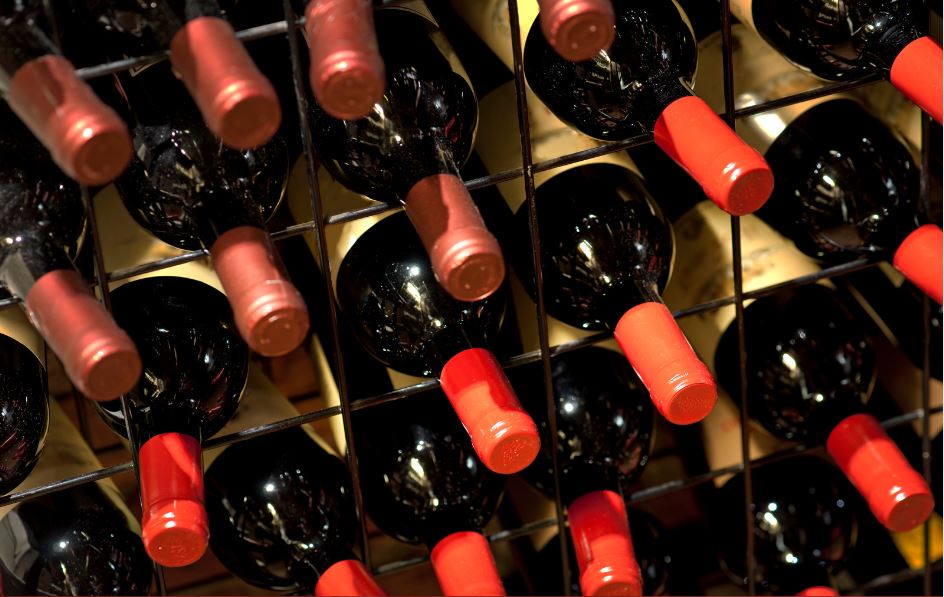
Beyond a month, lay bottles down. A horizontal bottle keeps wine in contact with the cork, and a wet cork stays swollen and airtight. A dry cork shrinks, allows oxygen in, and often crumbles when you eventually try to open the bottle.
This applies most to vintage Champagne and prestige cuvées held for years, but it is good practice for anything you are not opening soon. If you have a bottle waiting in a cupboard for an anniversary, it should be on its side.
Light, Humidity, and Vibration
Three further conditions affect sparkling wine, and all of them are straightforward to manage at home.
Light is the most damaging. Champagne exposed to sunlight or fluorescent light develops a fault known as “goût de lumière”(taste of light), which presents as wet wool or reductiveness – think struck match on the nose. Clear and lightly tinted bottles are the most vulnerable, which affects a good number of rosé and prestige bottlings. Keep bottles in the dark, or simply leave them in the box they came in.
Vibration is less obvious but still worth avoiding if you can. Constant low-level movement disturbs sediment and accelerates chemical reactions in the wine. The top of a fridge, a shelf in a laundry room, or a cabinet next to a dishwasher are all common storage spots that cause problems over time.
Storing Champagne in Calgary's Dry Climate
Champagne prefers relative humidity between 50 and 85 percent, which is higher than most Calgary homes provide. The climate here is semi-arid, and indoor humidity through a Prairie winter routinely falls well below that range.
Dry air pulls moisture from any exposed cork, and a shrinking cork is the most common cause of a flat bottle. Chinooks add to the problem, since a large temperature swing over a single afternoon changes indoor humidity along with it.
There are two practical responses. Store bottles horizontally so the wine keeps the cork wet from the inside, and choose the most stable and least heated room available rather than the most convenient one.
Where to Store Bottles Without a Wine Cellar
Most of Cork's customers live or work downtown, and very few have a cellar. A dedicated wine fridge set to 10 to 12 degrees is the most complete solution, since even a small twelve-bottle unit handles temperature, humidity, and light at once. Failing that, an interior closet on the coolest side of the home works well, provided it is away from exterior walls and heating vents.
An unheated storage room or parkade locker is a reasonable option as long as the temperature stays above freezing year-round. The bottom shelf of a bookcase against an interior wall will also do, with bottles lying flat and left in their boxes.
The places to avoid are consistent: on top of the fridge, above the stove, near a heating vent, in a west-facing room, or anywhere direct sun reaches for part of the day.
How Long Does Champagne Last Unopened?
Champagne does not carry an expiry date and will not spoil in a way that makes it unsafe. What it has is a window during which it tastes the way the producer intended, and the length of that window depends on the wine.
Non-Vintage Champagne
Most non-vintage Champagne is made to drink on release. The house has already aged it on the lees for several years before it ships, and the blend is designed to taste complete when you buy it.
Three to four years from purchase is a reasonable expectation with decent storage. Some bottles will hold longer and take on attractive toast and nut character, but holding a non-vintage bottle is a gamble rather than a plan.
Vintage Champagne and Prestige Cuvées
Vintage Champagne is built differently. These wines come from a single year, spend longer on the lees, and are made with age in mind. Five to ten years past release is normal, and the best examples run considerably longer than that.
If you are holding a vintage rosé or a Grand Cru cuvée for a milestone, storage conditions stop being optional. These are the bottles that a warm closet will genuinely damage.
How to Tell if Champagne Has Gone Bad
Most problems are visible before you pour. Check whether the cork has pushed up past the lip of the bottle and whether the wire cage still sits tight, since either can indicate heat damage. A noticeably low fill level in a young bottle suggests the seal has been leaking.
Once open, the signs are quick to read. There will be little or no mousse, or bubbles that disappear within seconds of pouring. The colour will be deeper than it should be, closer to gold or brown than pale straw or pink. The nose tends toward stewed apple, sherry, or wet cardboard rather than citrus and brioche, and the finish falls flat without acidity to carry it.
One exception is worth knowing. A struck match or wet wool smell that clears after a few minutes in the glass is usually reduction rather than damage, so give the wine a swirl before writing the bottle off – if that reductiveness blows off after giving the wine a minute to breathe, you’re safe to enjoy a glass.
How to Store Champagne After Opening
An open bottle begins losing pressure immediately, and pressure is what holds the carbon dioxide in solution. The aim is to slow that loss down.
Reseal the bottle as soon as you are done pouring and return it to the fridge. Cold wine holds dissolved carbon dioxide better than warm wine, so refrigeration is doing real work rather than simply keeping the bottle cool. Two to three days of good drinking is realistic, with five as the outside limit.
The original cork will not go back in. It expanded the moment it left the bottle and will no longer seal, which is why a proper stopper is worth having on hand.
Using a Champagne Stopper
A dedicated Champagne stopper clamps onto the lip of the bottle and holds against internal pressure, which an ordinary wine stopper or plastic wrap cannot do. They cost around fifteen dollars and make a clear difference.
A sealed bottle kept in the fridge will still have noticeable mousse on the third day. An unsealed bottle is usually flat by the following morning.
Does the Spoon Trick Work?
Hanging a silver spoon in the neck of an open bottle has no effect on carbonation. Blind tests comparing bottles with and without a spoon have found the same rate of loss in both.
The idea has persisted largely because people who try it also put the bottle in the fridge, and refrigeration is what actually preserves the bubbles. A stopper does the rest.
Serving Temperature and How to Chill Champagne Properly
Non-vintage Champagne and most sparkling wine show best between 8 and 10 degrees Celsius. Vintage Champagne and richer prestige cuvées benefit from slightly warmer service, around 10 to 12 degrees, which allows the aromatics to open.
Serving too cold is a common mistake. Wine straight from the freezer registers as cold and fizzy and little else, and much of what you paid for is simply not detectable at that temperature.
How to Chill a Bottle Quickly
An ice bath is the fastest safe method. Half ice, half water and a good pinch of salt will bring a bottle to serving temperature in about twenty minutes, compared with roughly three hours in the fridge, because water conducts heat far more efficiently than air. Wrapping the bottle in a wet paper towel first speeds it up further.
The freezer is best avoided as a shortcut. Champagne freezes at around minus 6 degrees Celsius, and freezing wine expands against pressure that is already high, which is how corks get forced out and bottles crack. Fifteen minutes will do no harm, but an hour can, and a bottle left overnight will not survive. If you use the freezer, set a timer.
Champagne and Sparkling Wine at Cork Fine Wines, Downtown Calgary
Cork carries one of the largest Champagne collections in the city, including rare bottles and grower producers, alongside a broader sparkling wine selection covering Prosecco, Cava, Crémant, and pét-nat. The bottles below are currently in stock and span the range from everyday drinking to wines genuinely worth laying down.
Bartel Brut Rosé NV

A well-priced introduction to grower rosé Champagne, with red fruit character and enough freshness to drink on its own. This is a bottle to open within a year or two rather than cellar. Regular price $65.99. View the bottle.
De Vilmont Brut Grande Réserve 1er Cru

Sourced from Premier Cru vineyards, with classic apple, pear, and brioche character and a balanced, accessible finish. It works well as a house Champagne and is forgiving of imperfect storage. Regular price $69.99. View the bottle.
Amis de Beauregard Blanc de Noirs NV

Made entirely from black grapes, which gives it more weight and depth of red fruit than a typical non-vintage blend. A good choice with food, and it shows well when served slightly warmer than usual. Regular price $77.99. View the bottle.
Delamotte Brut

The sister house to Salon, founded in 1760, with the wine aged 30 to 36 months on the lees. Chardonnay-led, elegant, and refined without relying on a famous label. It has the structure to reward proper storage over several years. Regular price $93.99. View the bottle.
Pierre Péters Cuvée de Réserve Grand Cru

A benchmark grower Blanc de Blancs from Le Mesnil-sur-Oger, chalky and precise, and one of the more age-worthy bottles in the collection. Store this one on its side. Regular price $110.99. View the bottle.
Bérêche et Fils Brut Réserve

One of the most respected names in modern grower Champagne, textured and vinous in style. It drinks well now and improves with a few years in good conditions. Regular price $115.99. View the bottle.
If you are buying a bottle as a gift rather than for your own collection, our guide to choosing between Champagne, red, and white for a wedding covers that decision in more detail.
Cork Fine Wine, Liquor & Ale is an independent boutique wine store in the heart of downtown Calgary, with a curated selection of small-production wines and prestige bottles that often never reach the shelves. Come in for a recommendation, or book a private tasting with our team. We offer free downtown delivery on orders over $150 and free delivery across Calgary over $300.